Monday, April 15, 2024

A Grim Tale

Monday, April 15, 2024

Sengaku-ji Temple is a Zen Buddhist temple. The legendary Forty-seven Rōnin are buried here. (Rōnin are leaderless samurai.) The true story of the Forty-seven Rōnin is also known as The Akō Incident or The Akō Vendetta.

On January 31, 1703 a daimyō, or feudal lord, performed seppuku, or ritual suicide after being commanded to do so by a court. 

Here is what led up to this gruesome sentence:

A high court official named Kira had repeatedly mocked and insulted a daimyō known as Asano Naganori. Kira was an insolent, rude bully, and nobody liked him. Asano finally couldn’t take it any more, but he was in a bind. His honor demanded that he put a stop to Kira’s bullying, but Asano surely knew he would face execution or a sentence of seppuku because the Shogun had outlawed such vendettas. 

Ultimately, Asano assaulted Kira in what may have been a failed murder attempt. Asano was arrested, tried and ordered to kill himself with his sword. This was considered an honorable death. 

Asano asked his samurai to avenge his death and asked the priests at Sengaku-ji Temple to bury him on the temple grounds. With Asano dead, his samurai became rōnin, but they remained loyal to Asano. 

The rōnin planned, for over a year, to avenge their master’s death by killing Kira. The rōnin knew they would also be executed for carrying out their plot, but their loyalty to their master did not permit them to ignore his last request. The rōnin succeeded in capturing Kira and beheading him. They placed the head on Asano’s grave at Sengaku-ji Temple, gave all their money to the priests there, and asked the priests to see that they got a decent burial. Then they turned themselves in to the authorities and they were all sentenced to commit seppuku. They were buried next to their master, Asano, at Sengaku-ji Temple.

Today, people from all over the world come to see the site of the burial of Asano and the 47 samurai/rōnin. Their story has been told and re-told for 300 years now. It is well-known throughout Japan. It has been the subject of books, plays, films, paintings, and even an opera. It is entrenched in Japanese culture.

You can visit all the graves, and see the name and age of each person buried in each grave. The youngest was 16 years old. In fact, we were very strongly “encouraged” to purchase a bundle of incense and leave one or two sticks at each grave to send a message to each of the rōnin. If you go on December 14 you will see festival commemorating the incident.

I have been thinking a lot about this story. I am fascinated by it. What is it about the story that has made it so popular in Japan, and even in the west? What does the story say about Japanese culture? What can we learn from it today? Are we supposed to admire those involved?

I’m not sure what it means. To me it is a brutal, gruesome tragedy - a waste of many lives because of some misguided idea of honor and loyalty. That’s what I see when look at it through an American, female lens. Based on Wikipedia and This article, I think the Japanese see it as a story about national identity, about the glory days of the samurai, about loyalty and courage. I don’t think it is seen as a tragedy here in Japan, but as a source of pride. 

If I stop taking it at face value and start thinking about it as an allegory, it suddenly changes into a cautionary tale for us today. It says if you let a perceived injury fester, it can turn into a spiral of violence. It asks what is the point of blind loyalty? 

What does it say about our ability to obtain peace in the middle east? What does it say about what is happening in Washington right now? Speaker Johnson seems to be Asano and Marjorie Taylor Green is obviously Kira. Who is the shogun? Who are the 47? Who is going to be remembered in 300 years?

So, you might ask, “Why did I go to Sengaku-ji?” Honestly, I thought I was going to a temple. I had no idea I was going to see 48 graves. In fact, they didn’t even allow us to enter the temple.

Here are a few photos:

The main gate to.Sengaku-ji


The entrance to the temple - the crest of the temple can be seen.

Some pre-schoolers visit the temple grounds

I think this was Asano’s grave

I am placing burning incense in front of one of the rōnin graves

Several ronin graves


From this depressing and slightly creepy place, we walked for about 15 or 20 minutes to our next destination, a garden. Interesting things were spotted along the way.
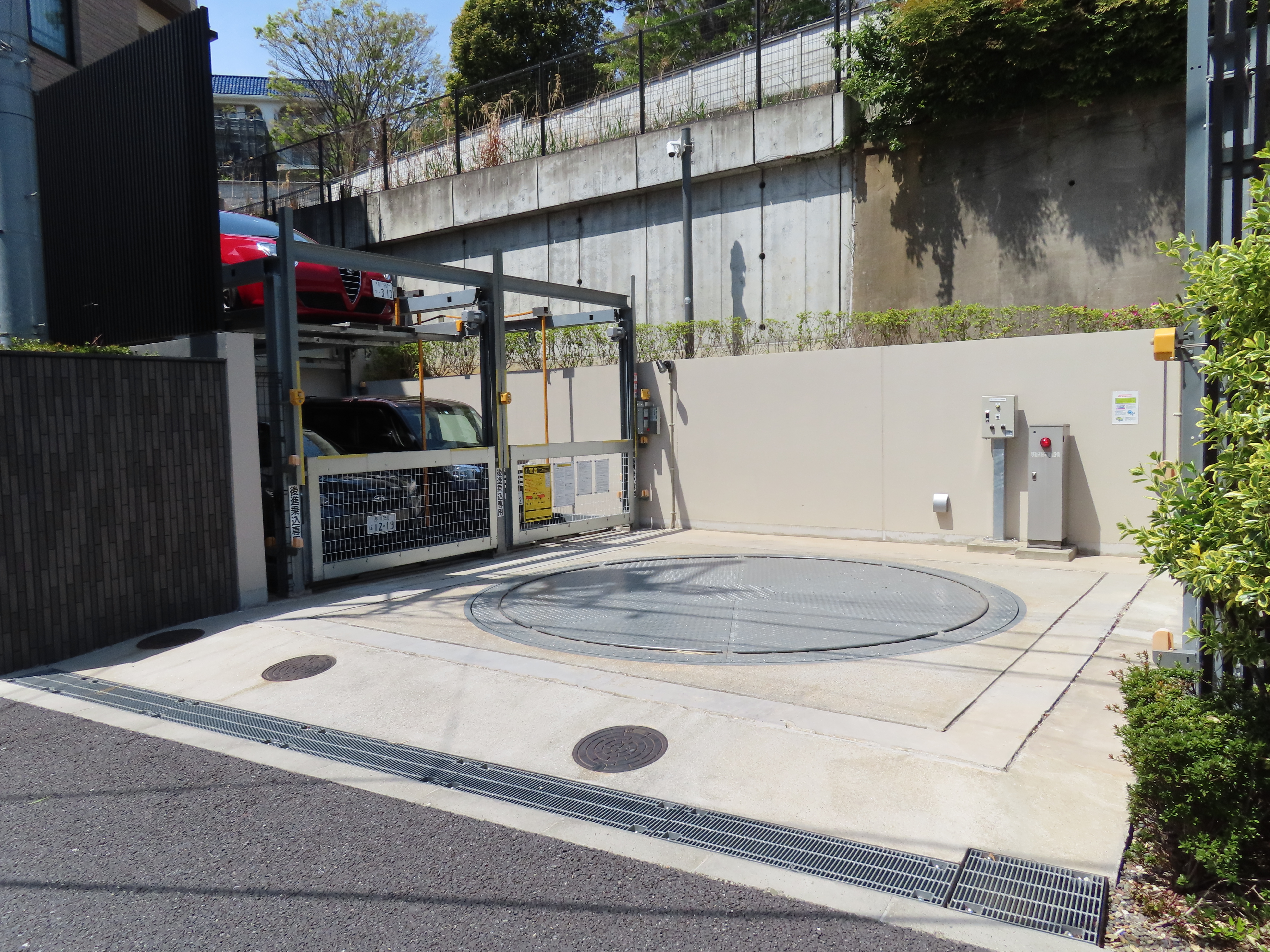
Cars are moved into and out of stacked parking spaces usinng this turntable

The road was very steep

A tiny roadside shrine

Meiji Gakuin University

Happo-en Garden turned out to be more of an event venue than a garden, but it was a pleasant place.We had lunch in the main building and then we wandered around the garden. It was surprising to find such a large wooded tract in the middle of the city.


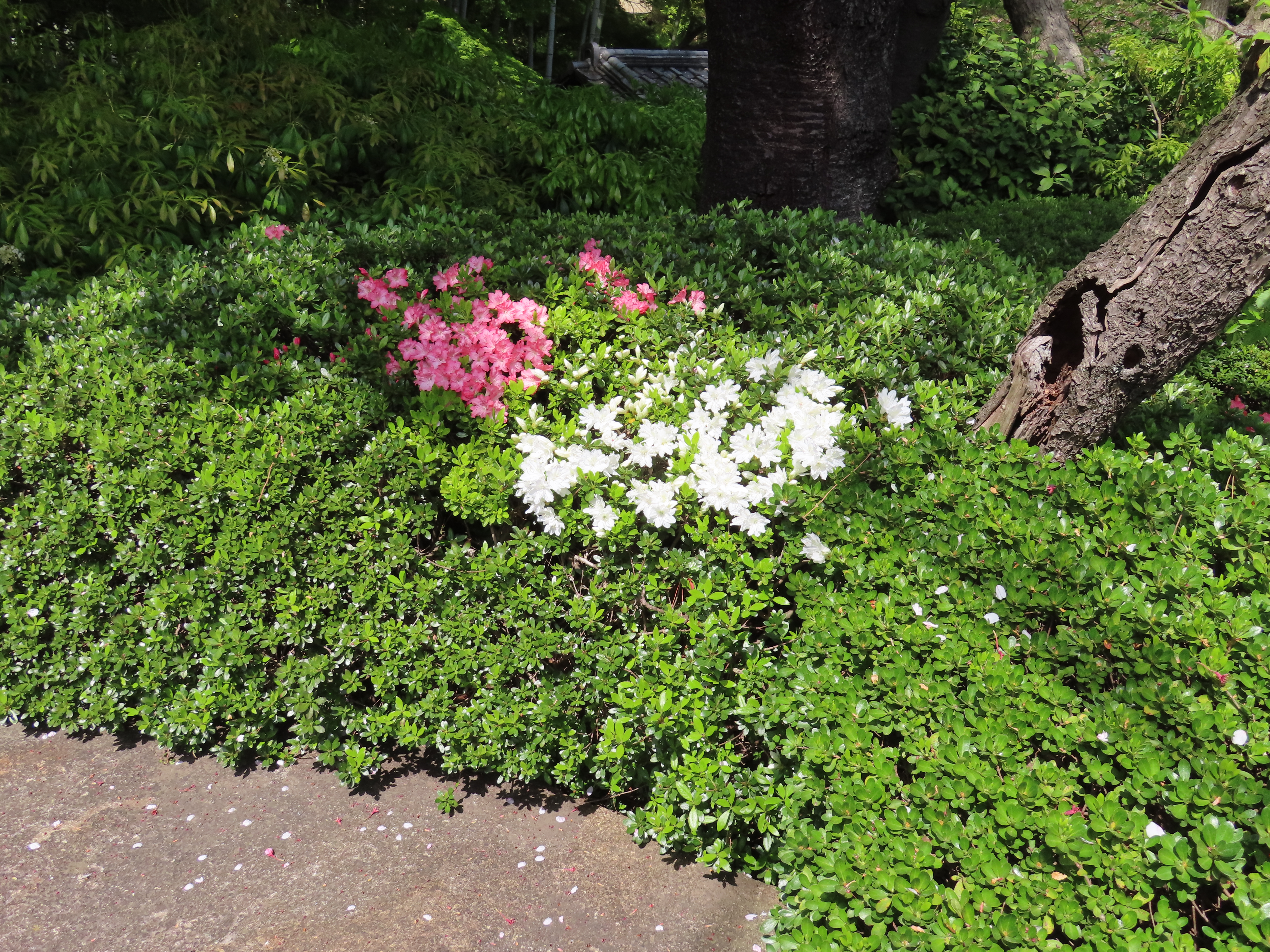
Azaleas are just starting to appear now!


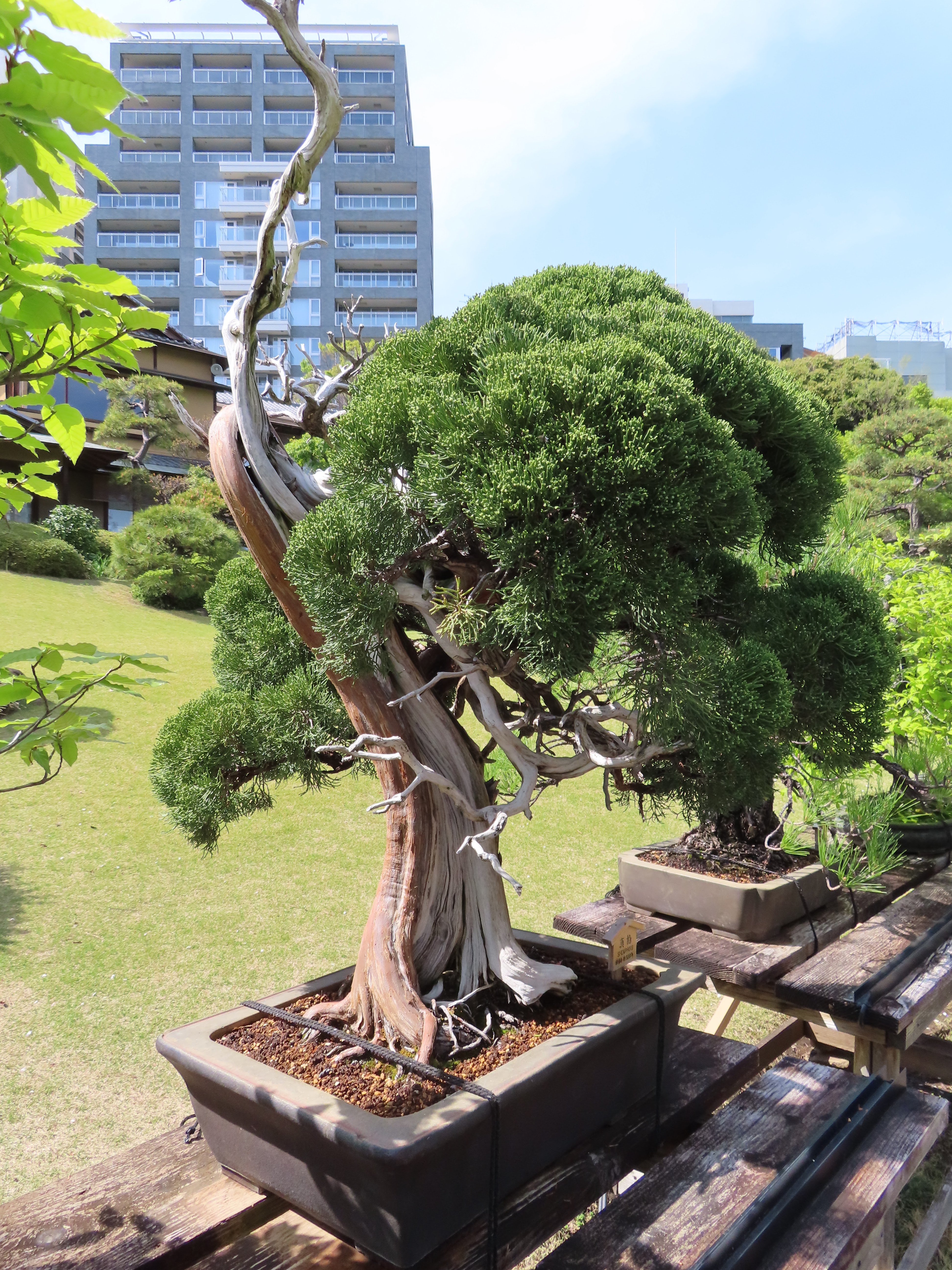
The garden had an interesting collection of the most delightful bonsai - some of them were 500 years old.



We went to a tempura place for dinner. (I’ll find the name and add it later.) It was good, but no more than that. 3 out of 5.

Today’s fabric is a traditional Japanese pattern called sayagata. It is a pattern that represents life and strength. It is a design of interlocking swastikas. That sounds terrible, but this does not refer to the Nazis in any way. This is an ancient Buddhist symbol. The Nazis appropriated the Buddhist symbol and turned it around in reverse when they began to use it.


Sunday, April 14, 2024

Sunday Afternoon in the Park

Sunday, April 14, 2024

Note: I have tried to fix the problem with yesterday’s fabric photo. I used a different photo and a different method of importing it. Please let me know if you are not able to see it now.

On such a beautiful day, and a Sunday, at that, great crowds of people showed up at Shinjuku Gyo-en National Garden to see the lovely cherry blossoms. The blossoms were a little bit past their peak, but still perfectly glorious. 

People were walking about, sitting on blankets, enjoying picnics, and admiring the landscape. Women with parasols shaded themselves. Toddlers ran about joyfully. It was a total party atmosphere.


Photo from Wikipedia, original by Georges Seurat

I began to realize that there are several varieties of cherry blossoms, some with double rows of petals, some a deeper shade of pink. They all looked stunning with the blue-blue sky as a backdrop.


After walking past all those wonderful trees, and past a place called “Mother and Chld Woods”, we reached the area designated “Traditional Japanese Garden.” It was charming and soothing. There was a pond full of large catfish begging to be fed, a tea house, a moon-viewing gazebo, arched bridges, and, of course, more cherry trees. It was hard to believe we were in the middle of the world’s largest city unless we looked up and saw skyscrapers peeking over the trees.


As we left Gyo-en, throngs of people streamed in through the entrance gate. For a couple of blocks outside the gate throngs of people were headed toward the gate. This sight made me realize I had probably never seen an actual “throng” before, but the cherry blossoms had undeniably attracted “throngs.”

We went to Shinjuku Station to purchase our train tickets for the rest of our trip. We also stopped at a 7-Eleven to top off our IC cards. (An IC card is rechargeable and works on the subways and buses in Tokyo and most other cities in Japan. It also works on vending machines and in many restaurants and convenience stores.)


We ate lunch in the B2 level of Shinjuku Station, choosing a Korean restaurant without realizing it. The signage and the menu were written in Japanese characters. Korean writing looks quite different. Not that I can read Japanese writing. By the time we figured out it was a Korean restaurant, we just decided to stay because we were able to sit at a real table on real seats. I had a weird cold noodle dish that came with ice cubes in it. It was very bland. I was expecting more vegetables.
 

After lunch we went to Meiji Jingu. It’s an important Shinto shrine in the middle of a large, pleasant, wooded park. There were throngs here, too. Or maybe they were hordes.

The first torii gate
The approach to the shrine involves walking down a long path, through three enormous torii gates. These gates mark the transition from the secular world to a sacred space.

Barrels of sake wrapped in straw display the names of donors who help support the shrine.

The second gate

After the three torii gates, there is a final gate that looks like it can truly protect visitors to the shrine from the cares and stresses of the world outside. Before entering it is customary to may purify yourself with water.
The final gate
Once inside you may purchase omamori, amulets, and leave messages for the gods. You may not visit the main sanctuary, and we didn’t even see where it was.
Visitors purchasing omamori, and getting their fortunes told
We did get to see part of a ceremony involving young men and women dressed in white.

For dinner we went to a noodle place near Shinjuku Station called Tokyo Aburagumi Sohonten Nishi-Shinjuku. You wait until they have a seat for you, then you order from a machine.
The menu is very limited, but the food is good, and it arrives quickly. 
It was like ramen, but without the broth. Very nice chew to the noodles.

18,000 steps today. Oh, my aching feet.

Today’s fabric is dobby fabric. Dobby is a type of weave that creates texture and patterns in the fabric. This beautiful fabric was made in Japan by Hokkoh and is sold in the US by SewnInSeattle.


Saturday, April 13, 2024

Are We There Yet?

April 12-13, 2024

We left Hawaii. Our Lyft driver was a friendly Native Hawaiian named Kata. He is a rugby player and coach. We talked about sports and mentioned we were from Alaska. Naturally the conversation turned to snow. Kata wanted to know how much we got, how you walked on it, etc. He said it was too bad Alaskans couldn’t do sports in the winter. I said we have lots of winter sports, especially skiing. He said he meant “outdoor sports.” We said skiing is an outdoor sport. He said he meant sports you do on the grass, like rugby. Oh.

I hope he gets to go somewhere with a lot of snow some day. I think he will like it.

So we got to the airport and check-in and boarding went well. People are far less pushy about boarding in Hawaii. But still, after showing up three hours early, to allow for (non-existent) traffic and (non-existent) TSA lines, is how a 9-hour flight becomes a 12+ hour flight. It’s just something to be endured.

They kept us fed and watered, and we were given pillows and blankies and iPads full of movies. I finally got to see the Barbie movie. It was quite funny.

Comfy seats with mattress pads, comforters and pillows were waiting for us.

Ken enjoys a pre-flight Hawaiian Airlines Signature Mai Tai.

The Japanese-style meal was yummy, though the fried lotus root was like eating cardboard.

Best part of the meal: an origami salt and pepper holder/Aloha shirt.

The rest of the trip went smoothly. The walk from our gate to the immigration checkpoint was quite long, but after so much sitting, it was a good opportunity to stretch. 

We took a taxi to our hotel. Almost the whole ride was either underground or in a channelized, walled-off roadway. Not interesting, but over with quickly.

The hotel seems quiet tonight. Our bed beckons.


Today’s fabric is the Kū Mākou print designed for the Hawaiian Airlines uniforms in 2016. Kū Mākou means “We stand together.”

This photo comes from Hawaiian Airlines MEC (association of flight attendants).


Friday, April 12, 2024

If You Only Have One Day in Honolulu . . .

.  .  .  Don’t go on a rainy day.

Rainy Kapolei, Oahu

We are in a place called Kapolei. It was supposed to be near the airport, but really — not so much. It took 30 minutes of driving, mostly on freeways, to get here. 

Our hotel is part of a huge shopping mall. It is a welcome refuge, sandwiched between a 6-hour flight and a 9-hour flight.

Here is Ken with his happy-to-be-starting-a-new-adventure face.


We hadn’t taken off yet, but we had already been given POG Mimosas. (POG = Passionfruit-Orange-Guava juice). Glad to be leaving Anchorage, where April snow showers bring May mud puddles.

I just loved these unusual (to me, anyway) “corduroy” clouds. Guess what song has been playing in my head ever since. “Both Sides Now.” Listen Here if you were born yesterday and don’t know the song.


We have been dealing with a lot of tech to get ready for this trip. To get our immigration paperwork done, we had to battle with an app that was frustrating. (No, we are not immigrating.) To check in for today’s flight we had an unsuccessful skirmish with another app that was supposed to scan our passports. We checked in to our hotel and got a digital key. That wasn’t too bad, but, by bypassing the front desk, we didn’t get the (needed) bottles of water they used to give us. Will somebody please remind me not to do this type of check-in again?

And then the AirTags. I once loved our AirTags. They were fabulous. But when we were getting ready for this trip, we found that 4 out of 6 didn’t work at all. We tried new batteries. Nada. We Googled how to get them to work. Apple says to take the battery out and put it back in 5 times. The first four times it will play a sound. On the fifth time it will play a different sound and you are good to go. Nope. Somebody on YouTube said to take the battery out and put it in 5 to 8 times to get the different sound. That actually worked, on the 8th time, after about 30 minutes, for two of the batteries. I also found out that many of the batteries are now coated with a bitter coating to prevent kids from eating them. That’s relevant because the coating can interfere with the functioning of the battery in the AirTag. So, we either have three dead AirTags, or we need to find some uncoated batteries. If you have any suggestions, please put them in a comment.

What would FDR do?

Technology. You gotta love it!

Today’s fabric is Microfiber.


Microfiber is considered a “hi-tech fabric.” (There are many other types of fabric that are considered hi-tech.) This is a cloth for cleaning eyeglasses. 

I tried to sew microfiber once with my sewing machine. I was not successful. I believe there are special sewing machine needles available that will work. I then tried to sew the microfiber by hand. It was very difficult to get the needle to pierce the fabric. I was not pleased with the end result. Kind of like some of my other interfaces with Technology.